One Post to Finally Understand Event-Driven Architecture in 2026
Trying to understand event-driven architecture without the buzzword overload? This simple guide explains how it works, why it matters, and where it can go wrong.
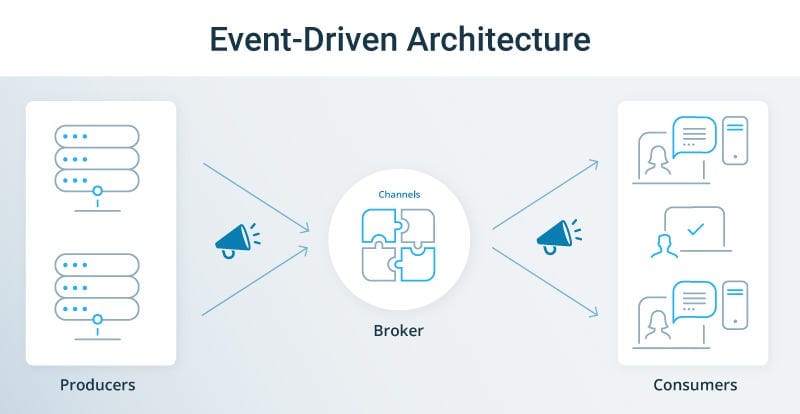
If you have been around software engineering content lately, you have probably seen event-driven architecture everywhere.
And yeah, there is a reason for that.
Modern systems are expected to be fast, scalable, flexible, and able to react to things in real time. That is exactly where event-driven architecture starts to look very attractive.
But let’s be honest: the name can sound more complicated than the actual idea.
So let’s make it simple.
In this guide, you will learn what event-driven architecture is, why people like it so much, what can go wrong, and how to think about it like a real engineer without needing a giant wall of diagrams and mysterious cloud icons.
What Is Event-Driven Architecture?
At its core, event-driven architecture (EDA) is a way of designing software where systems react to events.
An event is just something that happened.
Examples:
- a user signed up
- an order was placed
- a payment succeeded
- a file was uploaded
- a sensor reported new data
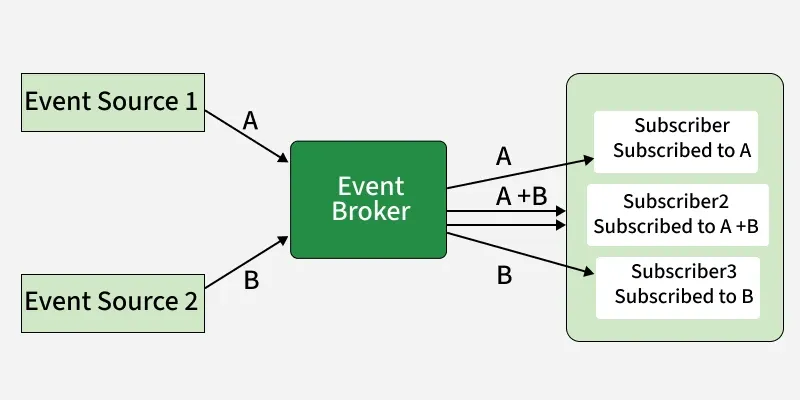
Instead of one service directly calling every other service one by one, a service can publish an event and let the rest of the system react if they care about it.
So instead of saying:
“Hey payment service, inventory service, email service, analytics service, please all do your thing right now.”
The system can simply publish:
OrderPlaced
Then other parts of the system can react to that event on their own.
That is the main idea.
Nice and clean.
The 3 Main Parts of Event-Driven Architecture
1. Producer
The producer is the part of the system that creates the event.
Example:
A checkout service creates an OrderPlaced event.
2. Event Bus or Broker
This is the middle layer that receives events and routes them to the right places.
Think of it like traffic control for messages.
3. Consumer
Consumers are the services that listen for events and react to them.
For example:
- the inventory service updates stock
- the email service sends a confirmation
- the analytics service records the sale
- the shipping service starts fulfillment
The cool part is that the producer does not need to know all the details about every consumer.
It just publishes the event and moves on with its life.
Honestly, that is a pretty healthy boundary.
A Super Simple Example
Let’s say someone buys a hoodie from your app.
Without event-driven architecture, your checkout service may directly call:
- payment
- inventory
- shipping
- analytics
That works, but it creates a lot of coupling.
Now imagine using event-driven architecture instead.
The checkout service publishes:
OrderPlaced
Then:
- Payment confirms the transaction
- Inventory updates stock
- Email sends a receipt
- Shipping starts preparing the package
- Analytics logs the purchase
One event. Multiple reactions.
That is one of the biggest reasons engineers like this approach.
Why Event-Driven Architecture Is Popular in 2026
Event-driven architecture fits really well with how modern software is built.
A lot of systems today are:
- distributed
- cloud-based
- made of multiple services
- expected to handle spikes in traffic
- full of integrations and background jobs
EDA works well here because it helps systems stay loosely connected while still reacting quickly to important changes.
It is especially useful when:
- many systems need to react to the same event
- teams want to work independently
- new features need to be added without rewriting old services
- work can happen asynchronously in the background
So yes, event-driven architecture deserves the attention it gets.
Not because it sounds fancy.
Because it solves real problems.
The Biggest Benefits
1. Loose Coupling
This is the superstar benefit.
A producer does not need to know every consumer in detail. It only needs to publish an event.
That means services stay more independent, and teams can move faster without everything being tightly glued together.
Less dependency drama.
More flexibility.
2. Better Scalability
Different consumers can scale independently.
If one part of the system is getting slammed with traffic, you can scale that part without scaling everything else.
That is way nicer than trying to stretch one giant all-in-one service.
3. Easier Feature Expansion
Need to add fraud detection later?
Need to trigger notifications?
Need to send data to another analytics pipeline?
In many cases, you can add a new consumer without changing the original producer very much.
That makes growth easier.
4. Real-Time Reactions
EDA is great when systems need to respond quickly to events as they happen.
Examples:
- notifications
- live dashboards
- payment workflows
- logistics tracking
- streaming data
- monitoring systems
5. Parallel Processing
A single event can trigger multiple tasks at the same time.
That can improve speed and make the system feel more responsive overall.
The Risks You Should Know About
This is the part people sometimes skip.
Let’s not skip it.
Event-driven architecture is powerful, but it can absolutely become messy if you use it carelessly.
1. Debugging Can Get Weird
With a normal request-response flow, it is often easier to trace what happened.
With EDA, the action may bounce across producers, brokers, consumers, retries, and delayed processing.
So debugging can feel less like following a straight road and more like tracking a squirrel through a forest.
2. Event Ordering Can Be Painful
Sometimes the order of events matters a lot.
If events arrive out of sequence, your system might react in the wrong way.
That can create confusing bugs that do not show up until the worst possible moment.
Classic distributed systems energy.
3. Duplicate Events Happen
Retries are normal in distributed systems.
That also means the same event may be processed more than once.
If your consumer is not built carefully, that can cause duplicated actions like repeated emails, repeated updates, or worse, repeated charges.
Nobody wants surprise chaos.
4. Eventual Consistency Confuses Beginners
Not everything updates instantly everywhere.
One service may update now.
Another a few seconds later.
Another after a retry.
This is called eventual consistency, and it is completely normal in many event-driven systems.
But if your team expects everything to be instantly in sync, you are going to have some uncomfortable conversations.
5. Schema Changes Can Break Consumers
Events are data contracts.
If you change the structure of an event carelessly, consumers can break.
That is why event design and versioning matter more than many beginners expect.
6. Observability Is Not Optional
If you cannot see what events were published, consumed, retried, or dead-lettered, the whole system becomes harder to trust.
Good logs, metrics, tracing, and monitoring make a huge difference.
Without them, you are basically debugging with vibes.
How Beginners Can Stay Out of Trouble
Here is the good news: most of the pain is avoidable.
1. Start Small
Do not make your whole platform event-driven just because it sounds modern.
Start with one workflow where async behavior actually makes sense.
Good beginner examples:
- welcome emails
- analytics events
- notification systems
- background processing after user actions
2. Make Consumers Idempotent
A consumer should be able to process the same event more than once without creating damage.
This is one of the most important habits in event-driven design.
If retries happen, your system should stay calm.
3. Design Events Carefully
Use clear event names.
Keep payloads intentional.
Avoid random changes.
Events should communicate something meaningful and stable.
4. Plan for Change
Your event formats will evolve over time.
That means you should think early about:
- versioning
- compatibility
- documentation
- safe rollout practices
5. Add Monitoring Early
Do not wait for production problems before adding observability.
Track:
- who published the event
- when it happened
- who consumed it
- whether it succeeded
- whether it retried
- where failures went
Future you will be very grateful.
6. Do Not Force EDA Everywhere
Sometimes a direct API call is better.
If one service needs an immediate answer from another service, request-response may be the right tool.
Simple is still a feature.
When Event-Driven Architecture Is a Great Fit
EDA is usually a strong fit when you need:
Multiple Reactions to One Event
One action triggers many follow-up tasks.
Asynchronous Processing
Not everything needs to happen during the user request.
Real-Time or Near Real-Time Updates
Great for live systems, alerts, and data flows.
Independent Services
Different teams or services can react without tight coupling.
Extensible Systems
New consumers can often be added later without huge changes.
When It Might Be Overkill
EDA might be too much if:
- your app is small and simple
- you mostly have straightforward CRUD flows
- your team is new to distributed systems
- you do not yet have good monitoring
- your workflow needs strict immediate consistency everywhere
In those cases, traditional request-response designs may be easier to build, understand, and maintain.
And that is totally okay.
Not every app needs a message broker and eight arrows in a diagram.
A Simple Mental Model
Here is the easiest way to think about it:
- Request-response says:
“Do this now and give me the result.” - Event-driven says:
“This happened. React if you care.”
That one difference changes how systems grow, scale, and evolve.
Once that clicks, event-driven architecture starts to feel much less intimidating.
Final Thoughts
Event-driven architecture is a strong tool for modern software systems, especially when you need scalability, flexibility, and real-time reactions.
But it is not magic.
It comes with trade-offs:
- harder debugging
- more moving parts
- more attention to contracts, retries, and monitoring
So the smart move is not:
“Let’s make everything event-driven.”
The smart move is:
“Let’s use event-driven design where it solves a real problem.”
That is where it shines.
And for beginners, that is the best mindset to start with.
FAQs
What is an event in event-driven architecture?
An event is a record that something happened, like a payment succeeding, a user signing up, or an order being placed.
Is event-driven architecture only for microservices?
No. It is common in microservices, but the idea can also be used in other architectures, including modular monoliths.
Do I need Kafka to use event-driven architecture?
No. Kafka is one option, but event-driven architecture is a design style, not a single tool.
What is the biggest beginner mistake in EDA?
Using it everywhere without a clear reason. It is powerful, but unnecessary complexity is still unnecessary complexity.
What should I learn first if I am new to event-driven systems?
Focus on:
- events
- producers
- consumers
- brokers
- retries
- idempotency
- eventual consistency
- observability
That foundation will take you a long way.